If you are trying to figure out how to build a remote marketing team from scratch, this is the step-by-step I wish I had when I started. I run MarketinCrew, a 60-person remote marketing team spread across Mumbai, Paris, Lyon and Toronto, and every mistake in this guide is one I made first so you do not have to.
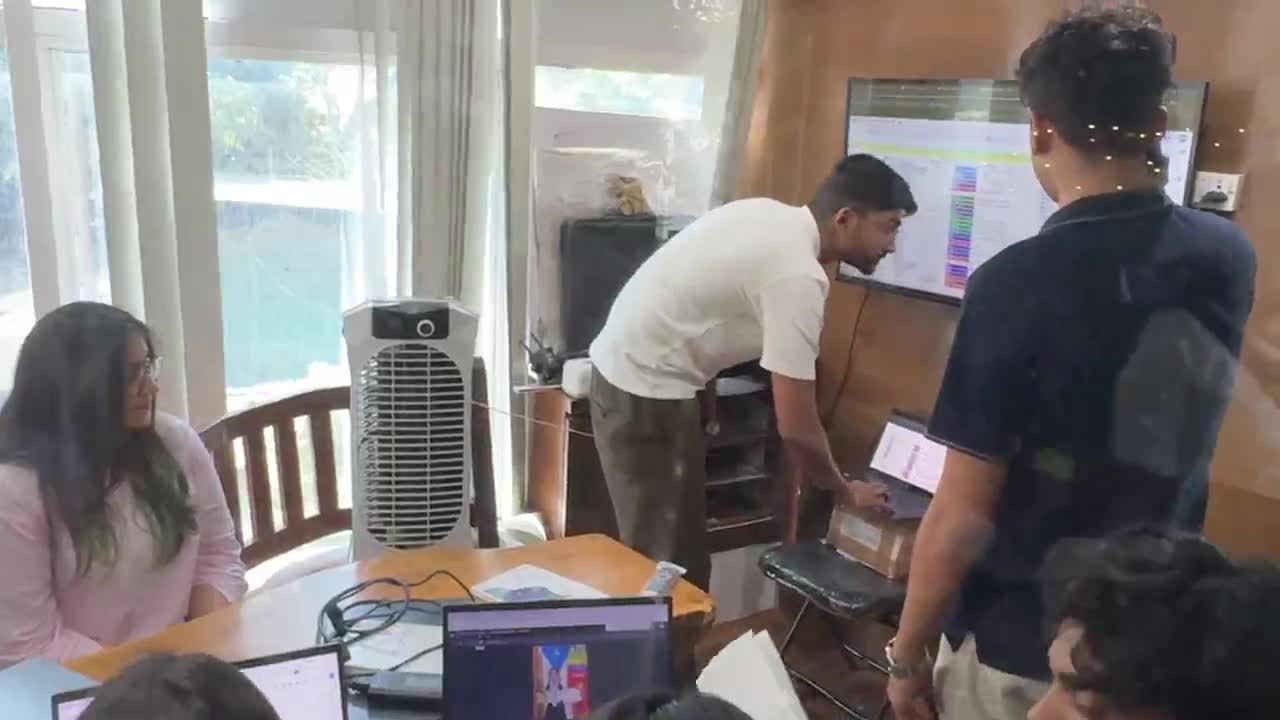 The crew
Building a remote marketing team in India is not about finding cheap labour. It is about assembling a small group of specialists who can ship every week without you in the middle. Here is the sequence, the roles, and the operating rituals that make it actually work for NRI businesses and Indian founders scaling globally.
Step 1: Decide what you actually need the team to ship
Before you hire anyone, write down the five marketing outputs the business needs every single week. Not job descriptions, outputs. Things like: two blog posts, twelve social posts, one email campaign, two ad creative sets, one landing page. The team you build exists to ship those outputs. If you cannot name them, you are not ready to hire.
Step 2: Hire in the right order
There is an order that almost always works, and skipping it is the most common mistake I see. Hire a strong generalist marketer or content lead first, someone who can think and write. Add a designer second, because everything ships faster with one. Add a performance or paid person third, once you have something worth running ads to. Only then add specialists like SEO, video, or PR. Out of order, you end up with specialists and no one directing them.
The first five roles, roughly in order
- Marketing lead / content strategist (the brain, hires 2 to 5)
- Designer (ships everything faster)
- Performance / paid media (once there is a funnel to feed)
- Social and community manager (distribution and voice)
- SEO or video specialist (only when the core four are humming)
Step 3: Hire for output, not for hours
Remote fails the moment you start measuring butts in seats. Hire against a weekly output expectation, pay for that output, and review against it every Friday. If someone cannot tell you what they shipped this week, the role is not defined sharply enough. Pay fairly for the Indian market, because the cost of churn is always higher than the cost of a good salary.
Step 4: Set the operating rituals before you need them
Three rituals carry a remote team. A short daily stand-up (25 minutes max) to unblock each other. A Friday demo where people show real work, not status slides. And a quarterly planning session to reset priorities. These three, run religiously, replace 90 percent of the management overhead people think remote requires.
Step 5: Pick a small, boring tool stack
One place for chat, one for tasks, one for documents, one for files. That is enough. The temptation in remote teams is to add tools to solve culture problems, and it never works. Slack, a project tracker, a shared doc drive, and a shared file store. Force everything else to fight for a reason to exist.
Step 6: Outsource the team you cannot or should not build
Not every business should build a full remote marketing team internally. For many NRI businesses, the smarter move is to outsource the marketing team in India to an operator who already has one, and to keep the strategy in-house. That is literally what I do through MarketinCrew: the founder owns direction, my team ships the work, and the cost is a fraction of building it from scratch. Decide early whether you want to build, outsource, or mix the two.
Step 7: Manage by the weekly output and the monthly number
Once the team is running, your job is two numbers. The weekly output (did we ship what we said we would?) and the monthly business number (did it move pipeline, revenue, or whatever you actually care about?). If both are healthy, leave the team alone. If either slips, that is the conversation to have. Remote teams do not need more management, they need clearer numbers.
Building a remote marketing team is not complicated, but it is sequential. Get the outputs clear, hire in order, set the rituals, and measure the right two numbers. If you want a sense of what a built team looks like for a business like yours, the discovery call is free.
The hiring playbook that reduces bad hires
Remote hiring multiplies the cost of a bad fit, so the process matters more than for an in-office role. The pattern that works is a paid trial task over a CV. Instead of interviewing on credentials, give a realistic two-hour piece of work, the kind the role actually ships, and judge the output. A writer writes a post from a brief. A designer redesigns one social card. A paid manager drafts a campaign structure for a real product. The trial tells you more than three interviews ever will.
References matter more remote, not less, because you cannot read the room. Talk to two previous managers, not peers, and ask one question honestly: would you hire this person again, and for what kind of role? The specificity of the answer is usually more revealing than the yes or no. Pay market rate or above for the Indian talent pool, because the cost of replacing someone mid-project, in lost momentum and re-onboarding, is always higher than the salary you saved.
Onboard deliberately, even though it is slower than you want. The first two weeks should be heavy on context: the business, the customer, the brand voice, the tools, the rituals. Most remote failures trace back to a thin onboarding where the new hire was dropped into the work without enough context to make good calls. Spend the two weeks. It pays back inside the first quarter.
See the Virtual CMO offering or book a 30-minute discovery call.