I'm based in Lyon, married into a French family, with most of my work split between Indian founders building global brands and European brands looking at India. Almost everything I've learned about marketing across borders came from being on both sides of the conversation.
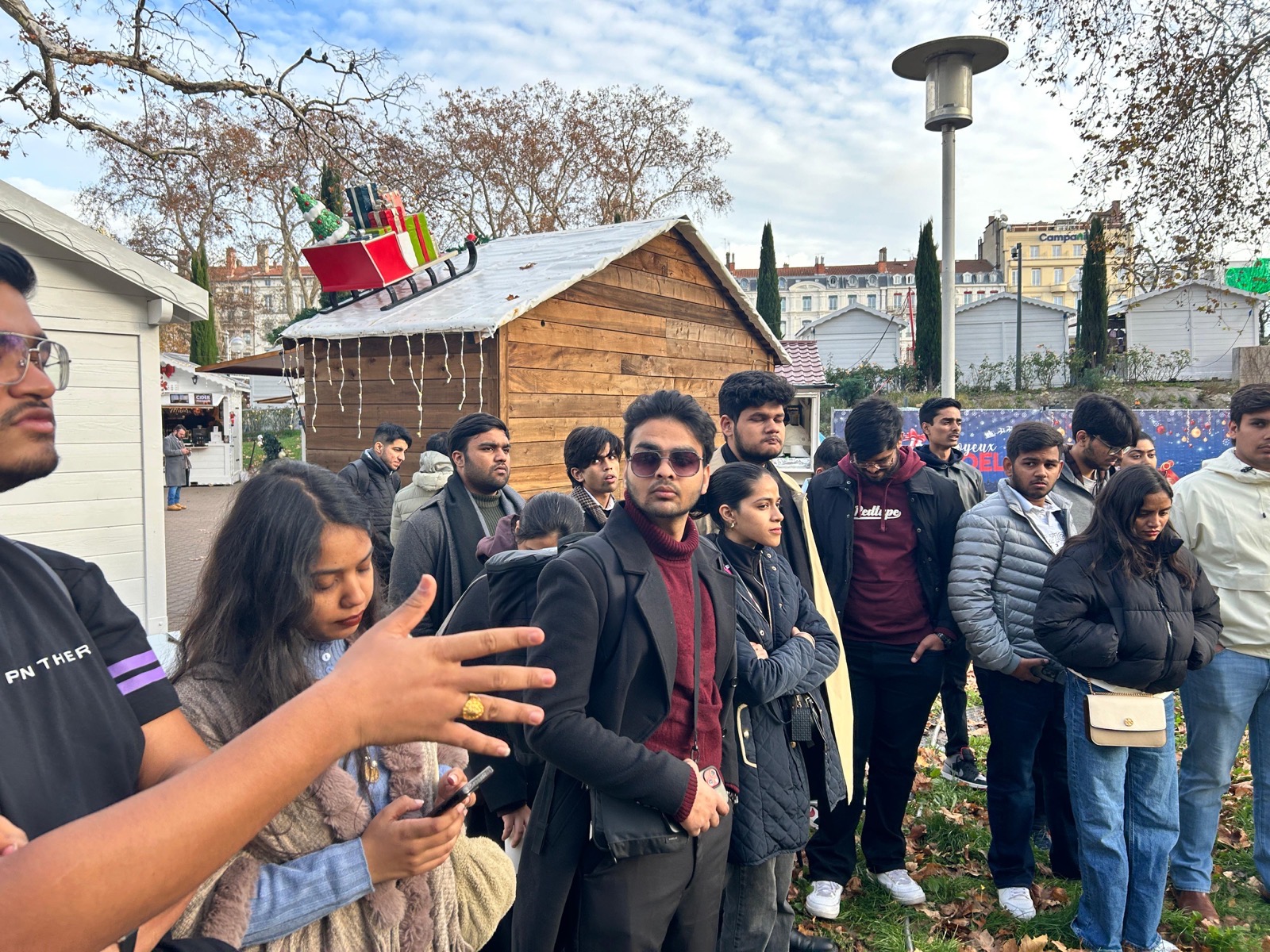 Out and about in Lyon
If you're an Indian founder thinking about Europe (or a European brand thinking about India), here's what I'd save you the time of learning from scratch.
What actually travels
1. Craft and substance
Good design, careful packaging, and a story that respects the audience travel everywhere. Indian brands like Tata, Ratan Tata's later work, Amul, Forest Essentials, Good Earth, and Nicobar all sell abroad because the craft is undeniable. European audiences respect substance more than scale.
2. The founder story, when it's specific
A specific origin (a restaurant, a family textile business, a temple, a school) travels. A generic "founded in 2018 by passionate entrepreneurs" doesn't. The more local the story, the more global the appeal.
3. Heritage as design language, not as a costume
Indian heritage as a visual system (block prints, hand-loom weaving, fine jewellery, miniature painting traditions) is having a quiet moment in European retail. The brands winning are the ones who use it as a design language, not as a costume.
What doesn't travel
1. Founder face on every piece of packaging
Common in India. Strange in Europe. European consumers read founder-front packaging as low-trust, not high-trust. Save the founder face for the about page and the press deck.
2. Aggressive sales tactics
Limited-time offers stacked on limited-time offers. Countdown timers. "Only 2 left in stock". European audiences mostly ignore them. Indian audiences sometimes engage with them. Same offer, opposite signal.
3. Voiceover-heavy video
Indian D2C reels are often built on voiceover plus B-roll. European audiences read this as TV-ad-style salesmanship. Switch to founder-led, talking-head, low-production-value content for Europe. It reads as more authentic.
4. The phrase "Indian luxury"
It signals self-consciousness. The best Indian luxury brands abroad never use the word "Indian luxury" in their marketing. The Indian-ness is in the product. The marketing speaks the language of luxury, full stop.
What surprises European brands looking at India
1. The price-to-quality compression
Indian customers expect more product for less money than European customers do. This isn't because Indian customers are cheap. It's because the Indian market has trained them to expect generous portions, multi-functional products, and high spec at low price. European brands entering India often underprice (and undermargin) by trying to match the floor instead of holding the premium and explaining why.
2. Family is the marketing channel
Word of mouth in India moves through family networks. WhatsApp is the dominant channel. The European playbook of "brand awareness on Instagram, conversion on Meta ads" doesn't work the same way. You need a community layer, family-network referral, and WhatsApp-friendly content.
3. Tier 1 and Tier 2 cities are different countries
Mumbai, Delhi, Bangalore, and Pune behave like a single international market. Surat, Ahmedabad, Indore, Jaipur, and Lucknow behave like a different one. A French brand that wins Tier 1 doesn't automatically win Tier 2. The aesthetic, the price, and the pack size often need a second version.
What the NRI founder needs to know
NRI founders building brands abroad have one big advantage and one big disadvantage. The advantage: you understand both markets. The disadvantage: you're tempted to launch in both at the same time. Don't.
The brands that win cross-border start by dominating one market completely. Either India or the destination country. Three years in, you have a base. From there, expansion is cheap. Day one, splitting your team across two countries is the most expensive thing you can do.
A short list of things to do
- If you're entering Europe from India, hire one person in-country. Not five. One who knows the press, the buyer landscape, and the wholesale rhythm.
- If you're entering India from Europe, partner with a Mumbai-based distributor before you build a brand team. Distribution is the choke point in India. Marketing is the cheap part.
- Get the photography reshot for the new market. The same product shot the same way reads as foreign in both directions. Reshoot for the audience.
- Write the press deck in the language of the destination market. Different anchor brands, different cultural references, different numbers.
- Don't translate your marketing copy. Rewrite it. Translation almost always reads as off-key, regardless of which language you're going into.
The shortest version
What travels: craft, specific founder stories, heritage as design language. What doesn't: founder-front packaging, aggressive sales tactics, voiceover-heavy ads, and the phrase "Indian luxury". European brands underprice in India, Indian brands undersell in Europe. Pick one market and win it first. Hire local. Rewrite, don't translate.
If you'd like help thinking through a specific market entry, this is exactly the kind of conversation we love having on a discovery call.